
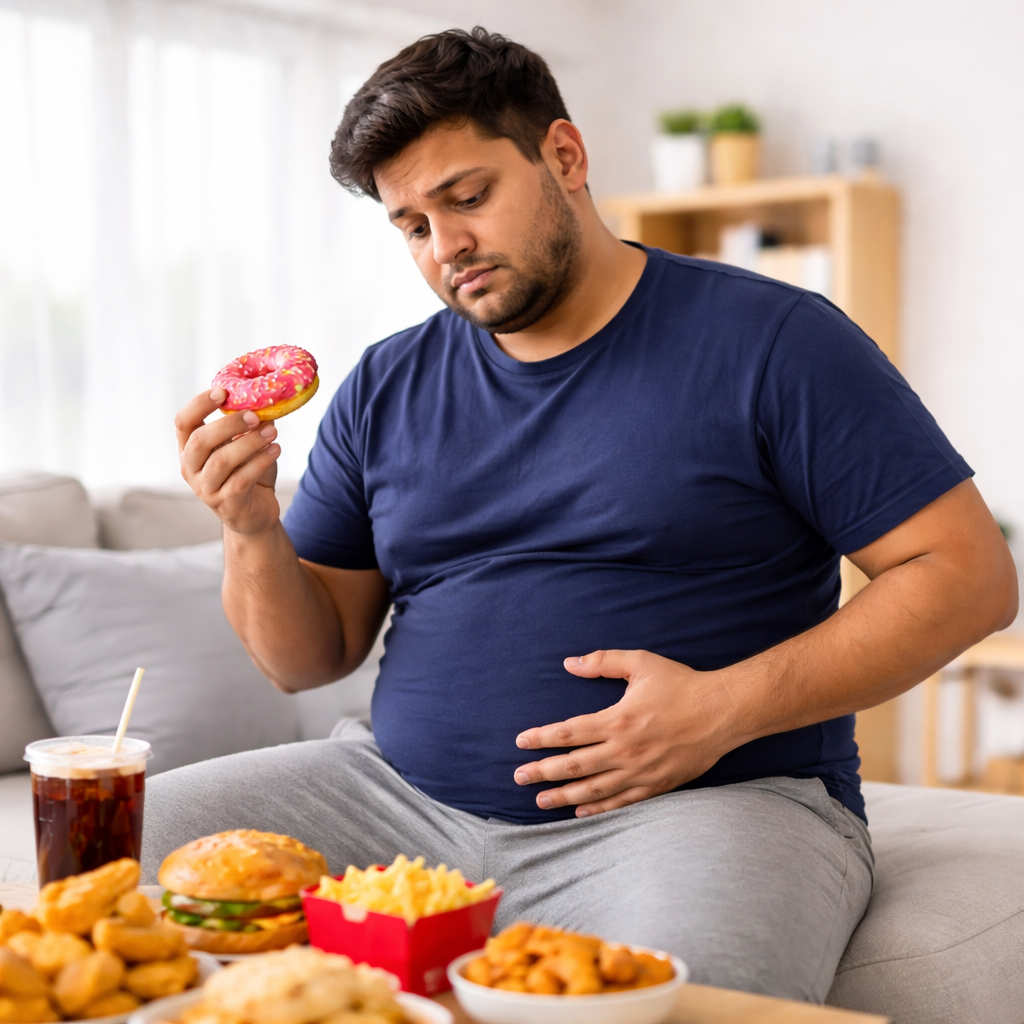
Obesity is a very serious health concern worldwide, even in India; affecting millions of people across ages. As the country is undergoing rapid modernization, changes in food habits have raised this issue. Understanding the connection between these lifestyle shifts and obesity is essential for effective health management. In this overview, we will explore what obesity is and practical strategies to manage it while promoting a healthier lifestyle.


1.What is Obesity?
Obesity is a medical condition where excess fat accumulates in the body, leading to health problems. It is commonly identified when a person’s body mass index (BMI) exceeds 30.
− Measure : The most common way to measure obesity is by calculating the Body Mass Index (BMI), which is a ratio of weight (in kilograms) to height (square of height in meters). A BMI over 30 is classified as obese, while a BMI between 25 and 29.9 is considered overweight.
Overweight refers to a person who has more fat than is considered healthy for their height but not to the level of obesity. Obesity is a more serious condition than simply being overweight.
The rise of obesity in the current generation is linked to sedentary lifestyles, unhealthy eating habits and stressful living, increased screen time, lack of physical activity, easy access to fast food, and a higher consumption of processed foods are major contributing factors.
2.Which eating and physical activity habits cause obesity?
− High Consumption of Processed Foods : Foods like chips, pastries, sugary drinks, and fast food are high in unhealthy fats, sugars, and calories which can be a reason for weight gain.
− Irregular Eating Times : Skipping meals or eating late at night can disturb the body’s metabolism and lead to overeating.
−Lack of Physical Activity: Sitting for long periods, watching TV or using screens excessively without engaging in normal physical activities like walking or exercising increases the chances of weight gain.
Also, Smoking cigarettes and drinking alcohol can both contribute to obesity as smoking suppresses appetite temporarily but leads to weight gain and increased abdominal fat upon quitting, while alcohol is high in empty calories, stimulates appetite, and interferes with metabolism, promoting overeating and fat storage.

3. What happens when you become obese?
− Mental Health Issues : People with obesity are more likely to experience depression, anxiety, and a low quality of life due to social stigma and self-esteem issues.
− Increased Risk of Chronic Diseases : Obesity increases the risk of several chronic diseases, including heart disease, high blood pressure, strokes and also type 2 diabetes due to insulin resistance. It also puts stress on joints, which can lead to osteoarthritis and can make sleep apnea worse.
Additionally, obesity raises the risk of certain cancers such as breast, colon and liver cancer.
These factors significantly impact overall health and quality of life.To reduce thesehealth risks effectively, it’s a good idea to store your regular medical records in a safe place and seek timely professional advice.
4. How to cure and manage obesity?
Dietary changes :
− Eat a balanced diet : Focus on eating a variety of whole foods, such as fruits, vegetables, whole grains, lean proteins and healthy fats. Avoid processed foods, sugary drinks, and high-calorie snacks.
− Control Portion Sizes : Reduce portion sizes to avoid overeating. Eating small, well- balanced meals throughout the day can help regulate hunger and support
metabolism.
Exercise and Physical Activity :
− Aim for at least 40 to 60 minutes of physical activity, such as walking, jogging or cycling along with 30 minutes of high intensity activities like running or playing a sport at least 4 times a week. Also, include strength training to build muscle and boost metabolism
Tracking Health Progress :
− Consultation with a Healthcare Professional : Regular check-ups with a doctor or nutritionist to monitor health parameters such as cholesterol, blood pressure, and blood sugar levels.
− Track Caloric Intake : Keep a food diary or use apps to track your daily calorie intake and ensure you’re eating within your recommended caloric limit.
− Monitoring of Weight and BMI : Regularly check your weight and measure your BMI to track your progress.
” Believe in yourself – take control of your health, overcome obesity and unlock your healthiest, happiest self!”
Final Thoughts
Obesity is a preventable condition and with the right steps anyone can manage their weight effectively and prevent it in their family members as well. By adopting healthier eating habits, encouraging physical activity and tracking health progress, you can protect not only yourself but also your loved ones from the risks of obesity. Tracking your family’s health and storing medical records is key to helping everyone stay on the path to better health. For more tips on health management and tracking medical records, visit Hfiles.
This blog post is brought to you by Health Files, your trusted platform for managing and organizing your health records. Visit us at Hfiles to securely store, access, share and track your medical documents with ease.